For more than ten years, Stelau has supported LSTI in its eIDAS certification audits. Our consulting engineers learn to assess rigorously, understand organisations and document findings that carry real responsibility.
Over 10 years alongside LSTIAssignments in France and EuropeRGS · eIDAS · ANSSI · ETSI
01 / A profession to learn
Becoming an auditor at 25. A real challenge.
An auditor’s responsibility is substantial. A finding can affect a trust service, its users and a certification decision. The profession calls for strong technical competence, a sound method and maturity in working with others.
Our young engineers can meet this challenge through training, practice and the development of three inseparable qualities.
01
Discernment.
Make findings that carry weight.
Identifying a genuine major nonconformity means connecting a specific requirement to verifiable facts and assessing its impact on the service. The auditor supports a proposed classification under the scheme’s rules; LSTI classifies it within its certification process.
Which requirement? Which facts? What impact?
02
Integrity.
Remain intellectually honest.
Listen to what the auditee presents and explains, be willing to revise a hypothesis and understand solutions that differ from your own habits. Assessment stays grounded in the intent and wording of the requirement, with impartiality and independence.
What does the evidence actually demonstrate?
03
Sustained attention.
Stay curious to the very end.
Five consecutive days of auditing can be demanding. Attention must be sustained, explanations cross-checked and open issues revisited. Tools support traceability; judgement remains attentive, responsible human work.
Do I have enough evidence to conclude?
THE CORE OF THE WORK
Assess conformity against defined requirements.
Human interaction makes that assessment possible: attentive listening, well-chosen questions and a desire to understand. The auditor returns to the requirement, seeks evidence that clarifies it and pursues the issue until it can be reported accurately, including any remaining limitations.
A requirementVerifiable factsA supported finding
02 / Engineers becoming auditors
Understand the mechanisms to examine the evidence.
Technology gives us a foothold. Training gives us a method.
Stelau’s consulting engineers understand the systems they examine. That technical competence helps them investigate cybersecurity aspects of audits: key protection, access control, operations, traceability and service continuity.
Understand the technology.
PKI, HSMs, cryptography, systems and protocols: understanding the mechanisms helps assess what a security measure actually achieves.
Learn to audit.
Study frameworks, prepare interviews, gather verifiable evidence and write precise findings: the method takes practice.
Develop together.
Training, shared experience and supervised practice support development. Assignment to audits considers assessed competence and the certification body’s procedures.
03 / A structured process
Follow the requirement through. Through to the report.
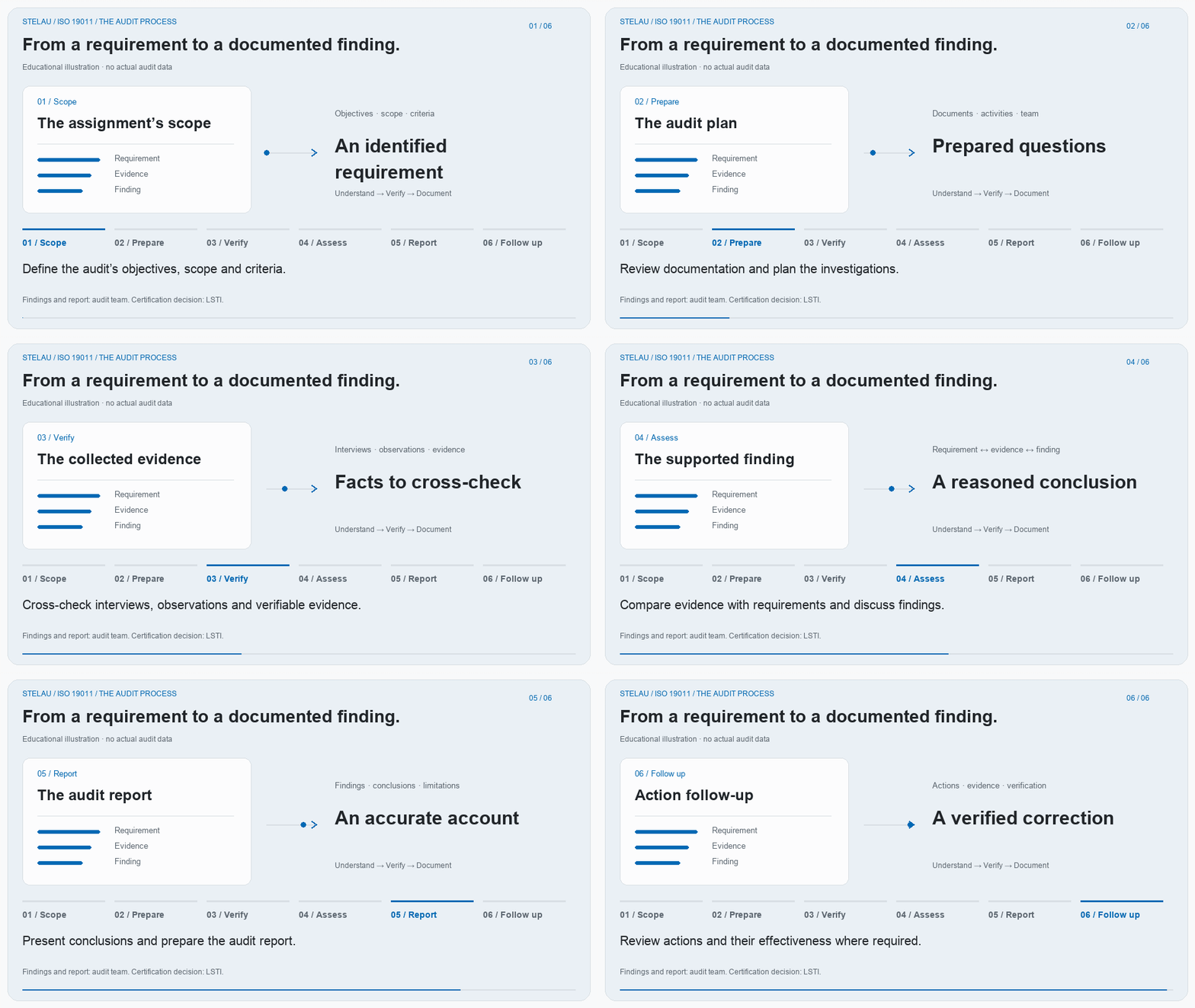
ISO 19011 provides guidance on conducting audits and auditor competence. Our animation illustrates a simple reading of that approach: prepare the investigation, gather evidence, assess it and document conclusions.
From RGS to eIDAS services. The same commitment to understanding.
Our experience has grown across French and European frameworks. The scope, versions and applicable requirements are defined for each assignment; each framework serves its own purpose.
Trust service governance
ETSI EN 319 401
Governance, risks, practices and operational security: the general baseline for trust service providers.
From the French RGS security framework to ANSSI’s cyber hygiene guide: experience with trust requirements and practical security controls. GHI is a good-practice guide.
Demanding organisations. Encounters that help us grow.
Auditing brings us into organisations with demanding standards. Understanding their practices, talking with their teams and checking explanations against the reality on site are also part of the profession’s appeal.
Our assignments take Stelau engineers across France and abroad, particularly in Europe. Travel, discussions in English and encounters with different organisations enrich both their experience and their technical perspective.
5 CONSECUTIVE DAYS
Attention throughout.
When an assignment runs over five days, mental availability must be sustained: prepare, listen, take notes, verify, share open issues and resume investigations. Duration depends on scope; attentive work is required throughout.
A convivial moment shared by Stelau.
Professional rigour. The pleasure of meeting people.
To preserve assignment confidentiality, audit photographs remain professional archives. The work images on this page introduce the approach; the final photograph shows a convivial moment. No confidential audit files or locations are shown.
06 / Requirements evolve
eIDAS v2. New services, new evidence.
The European framework extends to electronic attestations of attributes. Pub-EAAs are issued by, or on behalf of, a public sector body responsible for an authentic source; QEAAs are qualified attestations. Their respective frameworks must be distinguished when preparing future assessments.
This development extends our work: understand the origin of attributes, proof mechanisms and requirements for issuers. Standards monitoring and training connect new texts with auditing practice.
Our auditing practice draws on technical expertise and teamwork. Let’s talk about this profession, its responsibilities and how our engineers develop within it.