
IXI-Plus / Professional expertise
Cybersecurity expertise.
For insurance.
Establish the facts, understand an attack’s mechanisms and examine their causal link to a loss. Within the IXI-Plus network, Stelau provides technical expertise guided by rigour, professional ethics and a commitment to establishing the truth.
IXI-Plus / 02:51
Expertise, in the words of a practitioner.
An IXI-Plus interview introducing the cybersecurity expert profession and the people behind it.
Interview in French01 / Evidence
What establishes that an attack occurred?
Identify, examine and document the available evidence.
02 / Mechanisms
How did it work?
Reconstruct the timeline and explain the technical mechanisms.
03 / Causation
Did it cause the loss?
Examine the link between events and the reported damage.
A profession, a responsibility.
Working as a cybersecurity expert calls for technical competence, practical experience and an investigative method. It also entails professional responsibility: examine facts carefully, explain the reasoning and produce substantiated, understandable and verifiable conclusions.
This work for insurance is carried out within the scope of an agreed assignment. It is distinct from a judicial expert assessment commissioned by a judge through appointment by a court in France. Its own framework carries demanding standards of rigour and professional ethics.

A commitment to establishing the truth.
Our approach seeks to establish the truth: determine what the available evidence supports, examine competing hypotheses and identify what remains uncertain.
Conclusions follow the facts, including when those facts require the initial hypothesis to be revised.
Objectivity and impartiality
Exercise independent judgement and identify conflicts of interest.
Rigour and traceability
Document sources, investigative steps and the reasoning connecting findings to conclusions.
Confidentiality
Protect the information and data entrusted to the expert during the assignment.
Competence and sound judgement
Respect the scope of the assignment, acknowledge limitations and bring in additional expertise when needed.
Findings, hypotheses and conclusions are distinguished in the report. Observations from relevant participants are examined within the framework of the assignment.
Establish evidence of the attack and explain its mechanisms.
A reported attack calls for investigation. Logs, network traces, files, configurations, backups and other digital artefacts can help establish whether it occurred. Their origin, integrity and collection conditions need to be documented so their significance can be assessed.
- Examine
- Reconstruct
- Document
The analysis seeks to reconstruct the timeline, access paths, actions taken and affected systems. It examines mechanisms that could explain the findings alongside other possible causes, such as equipment failure, human error or misconfiguration.
The availability and quality of evidence determine what can be established. Each conclusion identifies its supporting evidence and the limits of the analysis.

Connect the mechanisms to the damage. Or rule out that link.
The occurrence of an attack and the existence of damage do not, on their own, establish cause and effect. The expert examines the technical sequence that could connect observed events to business interruption, data loss, system alteration or other reported damage.
Assessing causation involves comparing the timeline, identified mechanisms, extent of the effects and alternative explanations. This helps distinguish consequences attributable to the attack from those associated with other events or pre-existing failures.
- Link established
- Link ruled out
- Link undetermined
Depending on the available evidence, the assessment may establish a causal link, rule it out or conclude that it remains undetermined. Insufficient evidence does not, by itself, prove that no attack occurred.
Technical expertise within the IXI-Plus network.
Stelau contributes its cybersecurity skills to IXI-Plus network assignments for the insurance sector. Work may cover risk prevention, investigation of the causes of a loss, analysis of its consequences and appropriate recovery or preventive measures.
Technical findings are considered alongside other expertise needed for the assignment, including financial, industrial and crisis management skills. The report sets out the scope, material examined, findings, causal reasoning, limitations and recommendations. It informs decisions by participants in the insurance sector.
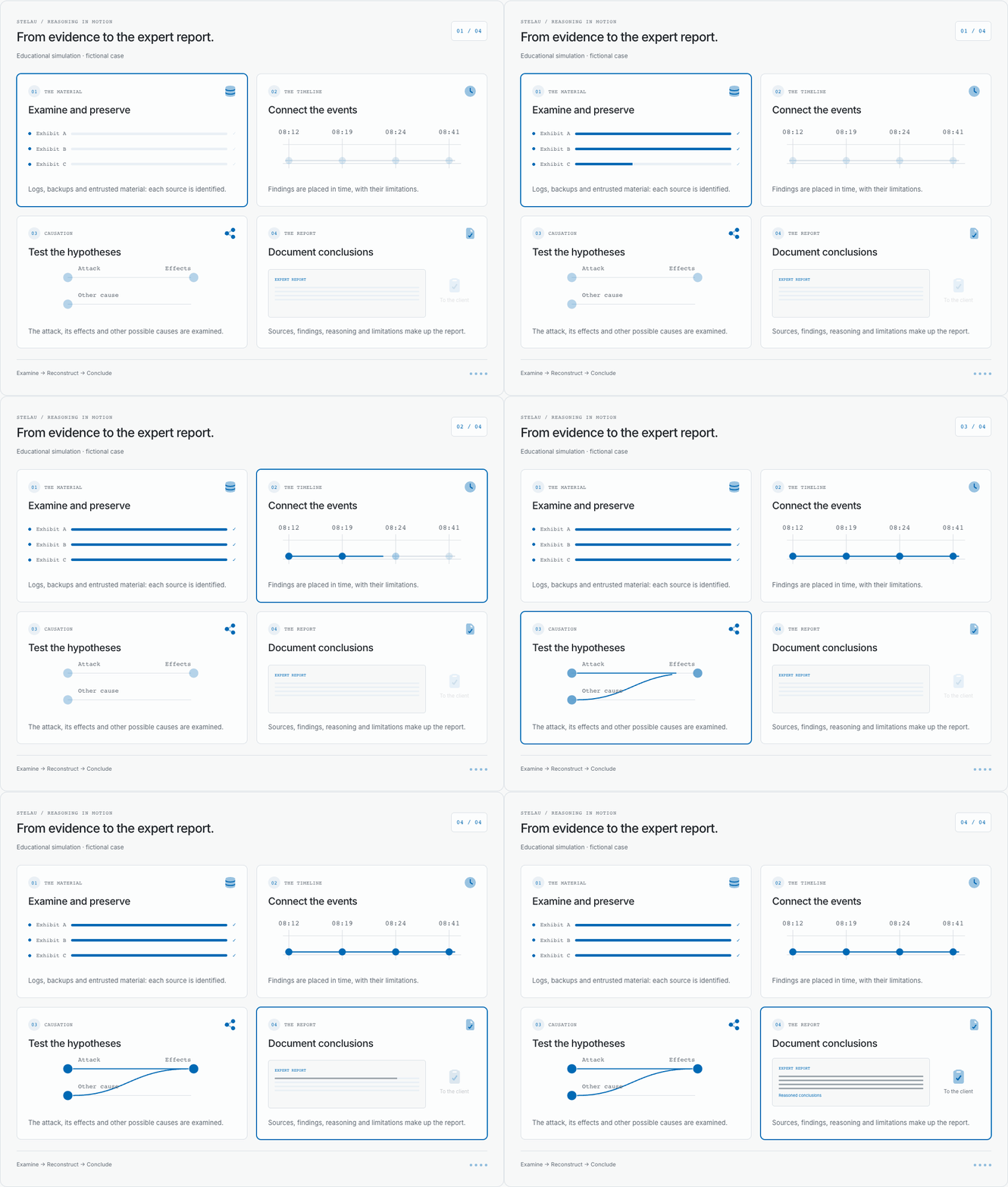
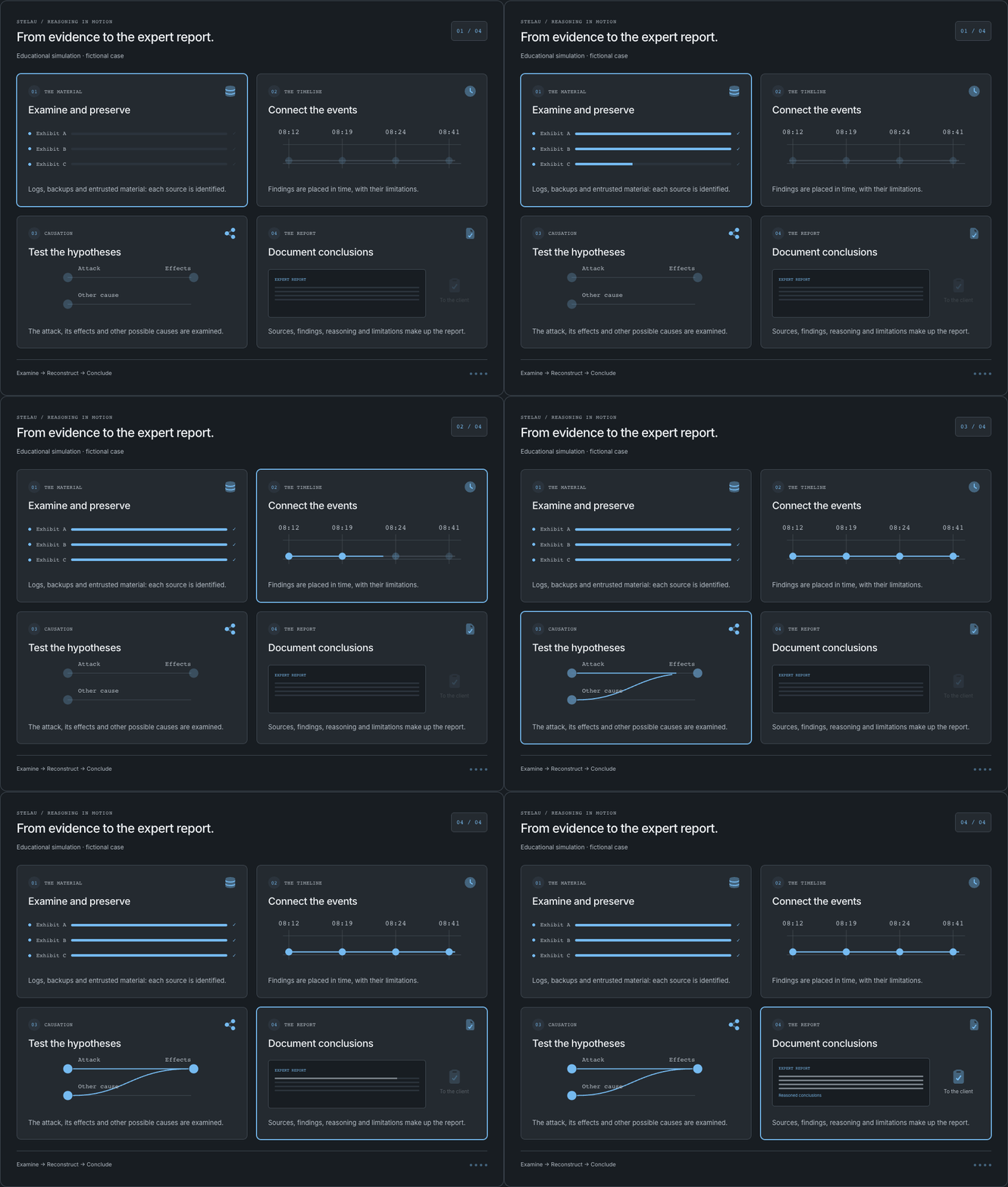
STELAU / REASONING IN MOTION
From evidence to the expert report.
Educational simulation · fictional case
The material
Examine and preserve
Logs, backups and entrusted material: each source is identified.
The timeline
Connect the events
Findings are placed in time, with their limitations.
Causation
Test the hypotheses
The attack, its effects and other possible causes are examined.
The report
Document conclusions
Sources, findings, reasoning and limitations make up the report.
From technical findings to a reasoned submission.
In the separate framework of a French judicial expert assessment, a party may send written observations to the appointed expert, commonly called a “dire”. Technical analysis can support those observations by citing exhibits, specifying facts, examining hypotheses and setting out points requiring a response.
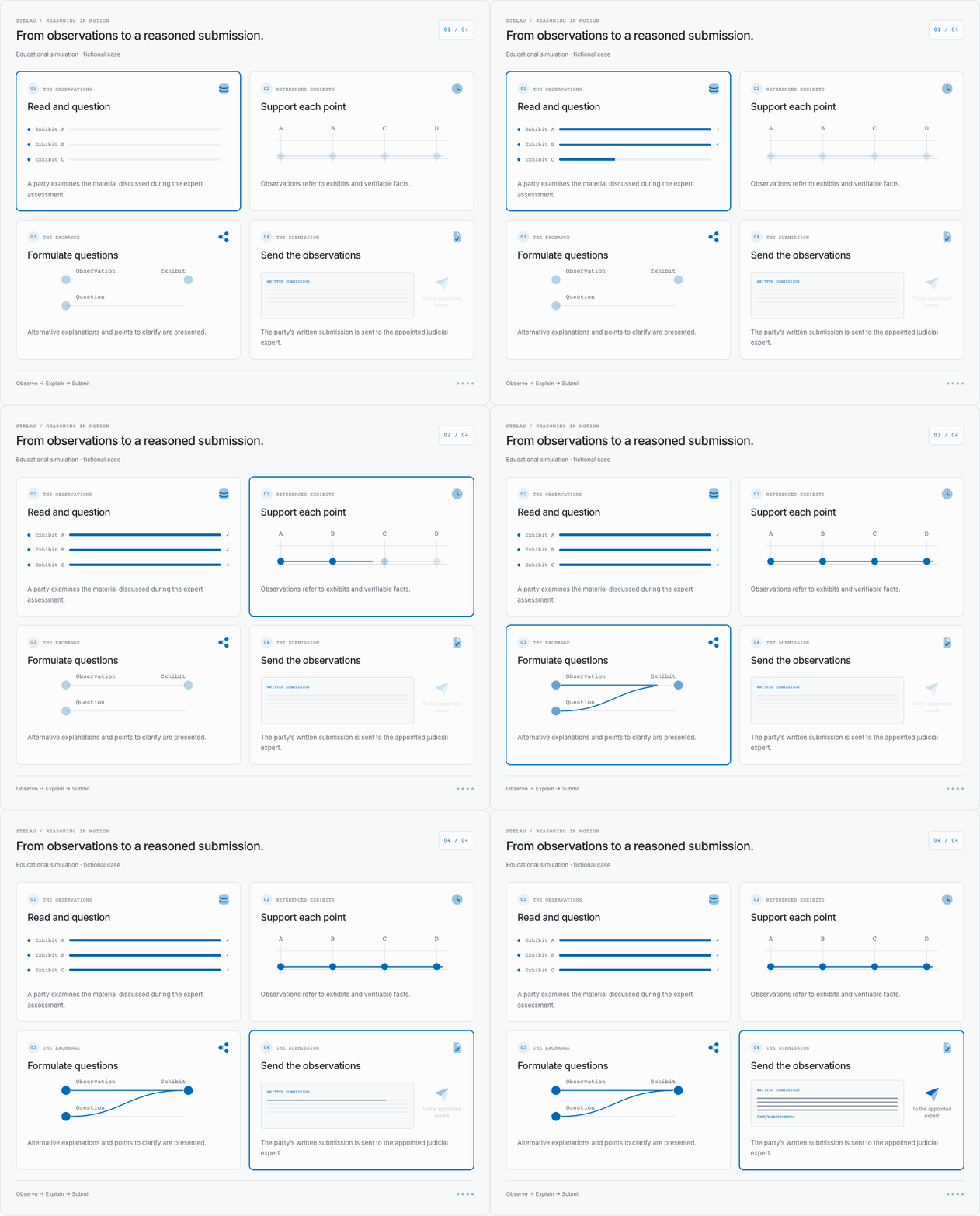
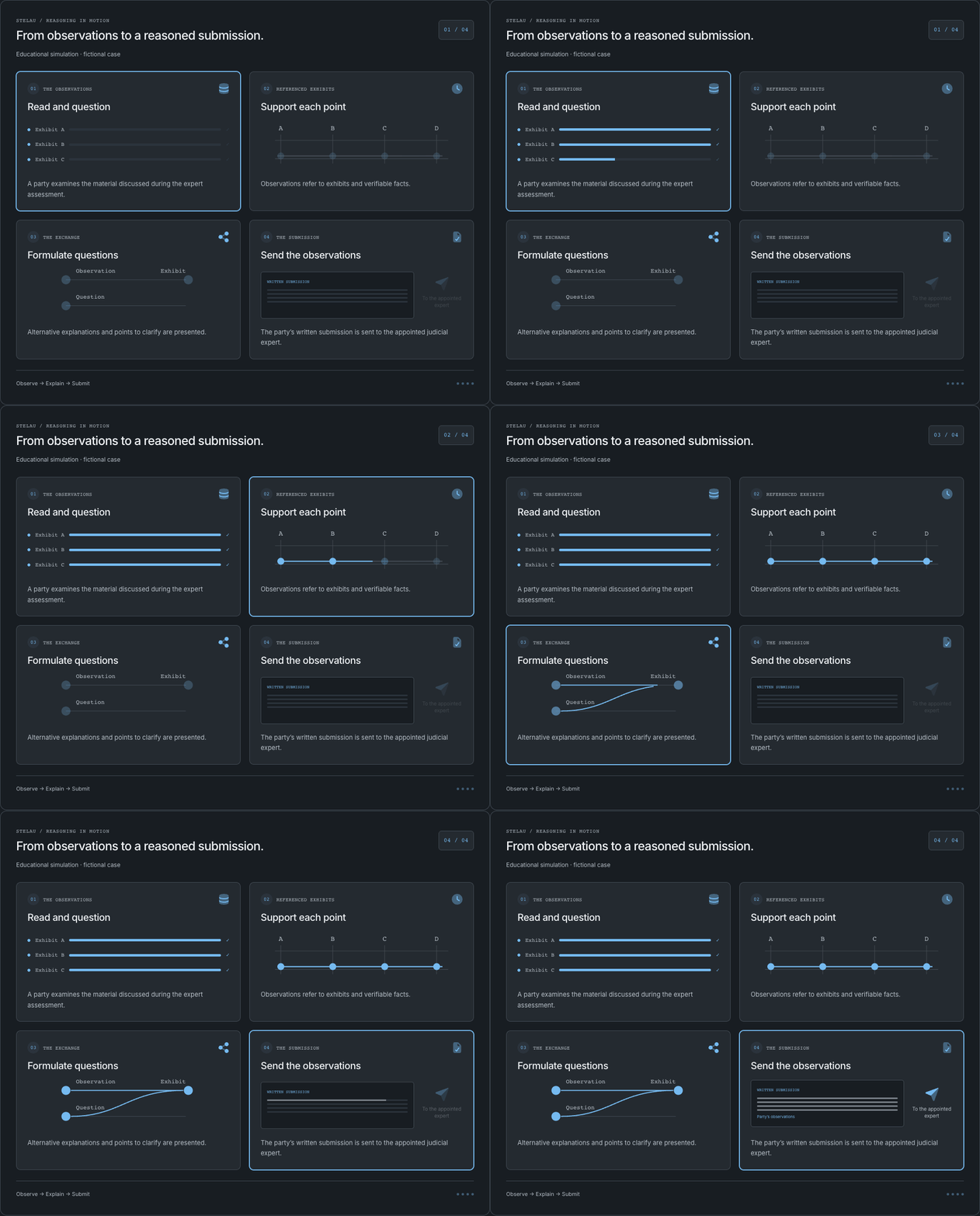
The submission sets out a party’s observations; it is distinct from the judicial expert’s report. The simulation below illustrates this process using a fictional case.
STELAU / REASONING IN MOTION
From observations to a reasoned submission.
Educational simulation · fictional case
The observations
Read and question
A party examines the material discussed during the expert assessment.
Referenced exhibits
Support each point
Observations refer to exhibits and verifiable facts.
The exchange
Formulate questions
Alternative explanations and points to clarify are presented.
The submission
Send the observations
The party’s written submission is sent to the appointed judicial expert.

Passing on professional practice.
Becoming an expert for insurance requires cybersecurity skills to be complemented by training in investigation, causal analysis, report writing and professional ethics. The experience of Stelau’s experts provides a foundation for passing on this practice to consulting engineers and supporting their development.
This development combines learning, case analysis and work alongside experienced practitioners. It builds the ability to justify a conclusion, test it against the facts and recognise what cannot be demonstrated.
An expert assignment to prepare or a situation to analyse?
Talk to our expertsBecause expert case files are highly confidential, photographs taken by Stelau during its assignments are retained in its professional archives and cannot appear on its website.